
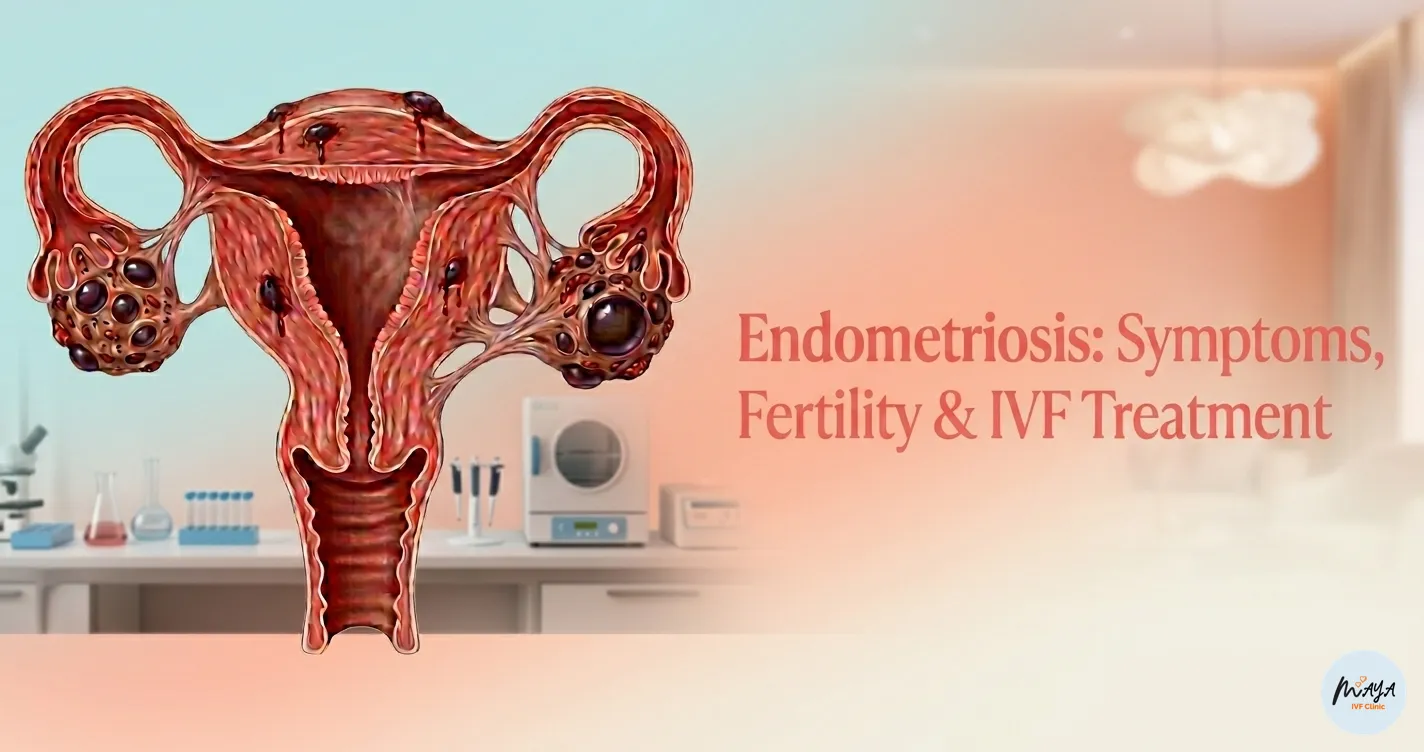
Diagram showing how endometriosis affects the uterus, ovaries, and fallopian tubes.
Blog Details
- Home
- Blog Details
Endometriosis: Symptoms, Fertility & IVF Treatment
Period pain is something many women experience. But when that pain is so intense that it makes you miss work, skip school, or cancel plans, it’s not something you should ignore. If your periods feel unbearable, or if you’ve been trying to get pregnant without success, endometriosis might be one possible reason.
In this guide, we’ll talk about endometriosis in clear, simple terms. You’ll understand what it is, why it causes pain, how it can affect pregnancy, and what treatment options are available. The aim is to help you feel informed, supported, and more confident about your body and your choices.
What Is Endometriosis?
Inside your womb (uterus), there is a soft lining. Every month, this lining grows thicker. If you do not become pregnant, the lining of the uterus sheds during your period.
Endometriosis happens when tissue similar to this lining grows outside the womb. It may grow on the ovaries, fallopian tubes, or other areas in the pelvis.
This tissue acts like the lining of the womb. It grows and bleeds during your monthly cycle. But it has no way to leave your body. Because of this, it can cause:
Swelling
Irritation
Scar tissue
Strong pain
Swelling
Irritation
Scar tissue
Strong pain
Why Endometriosis Can Be Hard to Notice
Many girls grow up hearing that period pain is normal. So when pain becomes severe, they think they just have to tolerate it. Some women visit many doctors before getting a clear diagnosis. The symptoms can look like other problems, which makes it confusing. If your pain feels stronger than what your friends or family describe, it is worth getting checked.
Common Symptoms of Endometriosis
Every woman’s experience is different. Some feel mild discomfort. Others struggle with daily pain. Here are the most common signs:
Every woman’s experience is different. Some feel mild discomfort. Others struggle with daily pain. Here are the most common signs:
Severe Period Pain
This is the most common symptom. The pain may:
Start before your period begins
Continue even after it ends
Feel sharp, deep, or heavy
Not improved with regular pain medicine
Ongoing Pelvic Pain
Pelvic pain is pain in the lower belly. With endometriosis, this pain may:
Stay even when you are not on your period
Feel dull and constant
Sometimes it becomes sharp suddenly
Start before your period begins
Continue even after it ends
Feel sharp, deep, or heavy
Not improved with regular pain medicine
Pelvic pain is pain in the lower belly. With endometriosis, this pain may:
Stay even when you are not on your period
Feel dull and constant
Sometimes it becomes sharp suddenly
Pain During Intimacy
Some women feel pain during or after sex. This can be emotionally stressful and may affect relationships. Many women feel shy talking about this, but it is an important symptom to share with your doctor.
Pain During Bowel Movements or Urination
If the tissue grows near the bladder or bowel, you may feel pain while passing urine or stool, especially during your period.
If the tissue grows near the bladder or bowel, you may feel pain while passing urine or stool, especially during your period.
Heavy or Irregular Periods
You may notice:
Heavy bleeding
Long periods
Spotting between cycles
Heavy bleeding
Long periods
Spotting between cycles
Difficulty Getting Pregnant
Endometriosis is one of the common causes of infertility. Some women discover they have endometriosis only when they try to conceive and face challenges.
How Endometriosis Affects Fertility
You may wonder how period-related tissue can affect pregnancy. The answer lies in how the reproductive system works.
For pregnancy to happen:
The ovary releases an egg.
The egg travels through the fallopian tube.
The sperm meets the egg in the tube.
The fertilized egg attaches to the womb.
The ovary releases an egg.
The egg travels through the fallopian tube.
The sperm meets the egg in the tube.
The fertilized egg attaches to the womb.
Blocked Fallopian Tubes
Scar tissue may block the fallopian tubes. If the tubes are blocked, the egg and sperm cannot meet. You can learn more about how blocked or damaged fallopian tubes affect pregnancy.
Inflammation
Endometriosis causes swelling and irritation inside the pelvis. This may harm the egg, sperm, or embryo.
Ovarian Cysts
Some women develop cysts on their ovaries called endometriomas. These cysts can affect egg quality and reduce ovarian reserve over time.
Implantation Problems
Even if fertilization happens, the embryo must attach to the womb. Inflammation may make this harder.
Not every woman with endometriosis becomes infertile. Many conceive naturally. But moderate to severe cases often need medical support.
Can You Have a Healthy Pregnancy with Endometriosis?
Yes, many women with endometriosis have healthy pregnancies. However, depending on severity, there may be a slightly higher chance of:
Miscarriage
Preterm birth
Placenta-related concerns
With proper medical care and monitoring, most pregnancies progress safely. Early treatment and regular checkups improve outcomes.
How Is Endometriosis Diagnosed?
Diagnosis usually begins with a detailed conversation about your symptoms.
Medical History
Your doctor may ask about:
Your period pattern
Pain intensity
Fertility history
Ultrasound
An ultrasound can detect ovarian cysts related to endometriosis.
Your doctor may ask about:
Your period pattern
Pain intensity
Fertility history
Ultrasound
An ultrasound can detect ovarian cysts related to endometriosis.MRI
Sometimes an MRI gives clearer imaging.
Laparoscopy
This is a minor surgical procedure and is considered the most accurate way to confirm endometriosis. Doctors can also remove abnormal tissue during this procedure.
Treatment Options for Endometriosis
Treatment depends on your symptoms, age, and whether you want to become pregnant.
Medicines to Control Pain
Pain relievers can reduce inflammation and help manage discomfort.
Hormonal treatments may also be used to slow the growth of endometrial tissue. These treatments reduce symptoms but are usually not suitable if you are actively trying to conceive.
Surgery
Surgery may be advised if:
Pain is severe
Medicines are not helping
Fertility is affected
Through laparoscopy, doctors can:
Remove endometrial tissue
Clear scar tissue
Open blocked tubes
IVF Treatment for Endometriosis
If pregnancy does not happen naturally, IVF (in vitro fertilization) may be recommended.
IVF works by:
Stimulating the ovaries to produce eggs
Collecting the eggs
Fertilizing them with sperm in a laboratory
Placing a healthy embryo into the womb
Because fertilization happens outside the body, IVF bypasses the fallopian tubes. This makes it especially helpful when tubes are blocked or damaged.
Emotional Impact of Endometriosis
Living with constant pain and fertility challenges can feel exhausting. Some women experience:
Stress
Anxiety
Low mood
Relationship strain
Seeking emotional support is important. Talking to a counselor or joining a support group can help you feel understood and less alone.
Stress
Anxiety
Low mood
Relationship strain
Seeking emotional support is important. Talking to a counselor or joining a support group can help you feel understood and less alone.
When Should You See a Specialist?
Consider consulting a fertility specialist if:
You are under 35 and trying to conceive for one year without success
You are over 35 and trying for six months
You have severe period pain
You already know you have endometriosis
You are under 35 and trying to conceive for one year without success
You are over 35 and trying for six months
You have severe period pain
You already know you have endometriosis
Simple Lifestyle Changes That May Help
Lifestyle changes cannot cure endometriosis, but they may support overall health.
Helpful habits include:
Gentle exercise like walking or yoga
Eating more fruits and vegetables
Reducing processed and fried foods
Getting enough sleep
Managing stress
Endometriosis is a real medical condition. Severe pain is not something you should silently tolerate. If your periods are affecting your daily life or your plans to start a family, seek medical advice. With early diagnosis, proper treatment, and emotional support, many women with endometriosis live healthy lives and become mothers.
Gentle exercise like walking or yoga
Eating more fruits and vegetables
Reducing processed and fried foods
Getting enough sleep
Managing stress
Frequently Asked Questions
endometriosis live healthy lives and become mothers.
Frequently Asked Questions
Can endometriosis go away on its own?
Endometriosis usually does not disappear completely on its own. Symptoms may reduce after menopause.
Is endometriosis cancer?
No. Endometriosis is not cancer. It is a non-cancerous condition, but it can cause significant discomfort and fertility issues.
Can I still get pregnant naturally?
Yes. Many women with mild endometriosis conceive naturally. Treatment is considered if pregnancy does not happen after trying for a certain time.
Does surgery cure endometriosis permanently?
Surgery can remove existing tissue, but the condition can return. Long-term management is important.
Is IVF safe for women with endometriosis?
Yes. IVF is widely used and considered safe. It is often recommended when other methods are not successful.
Our Latest Blogs
Myths and Facts about Infertility
When it comes to infertility, there are a lot of myths revolving around it in our society.Initially,...
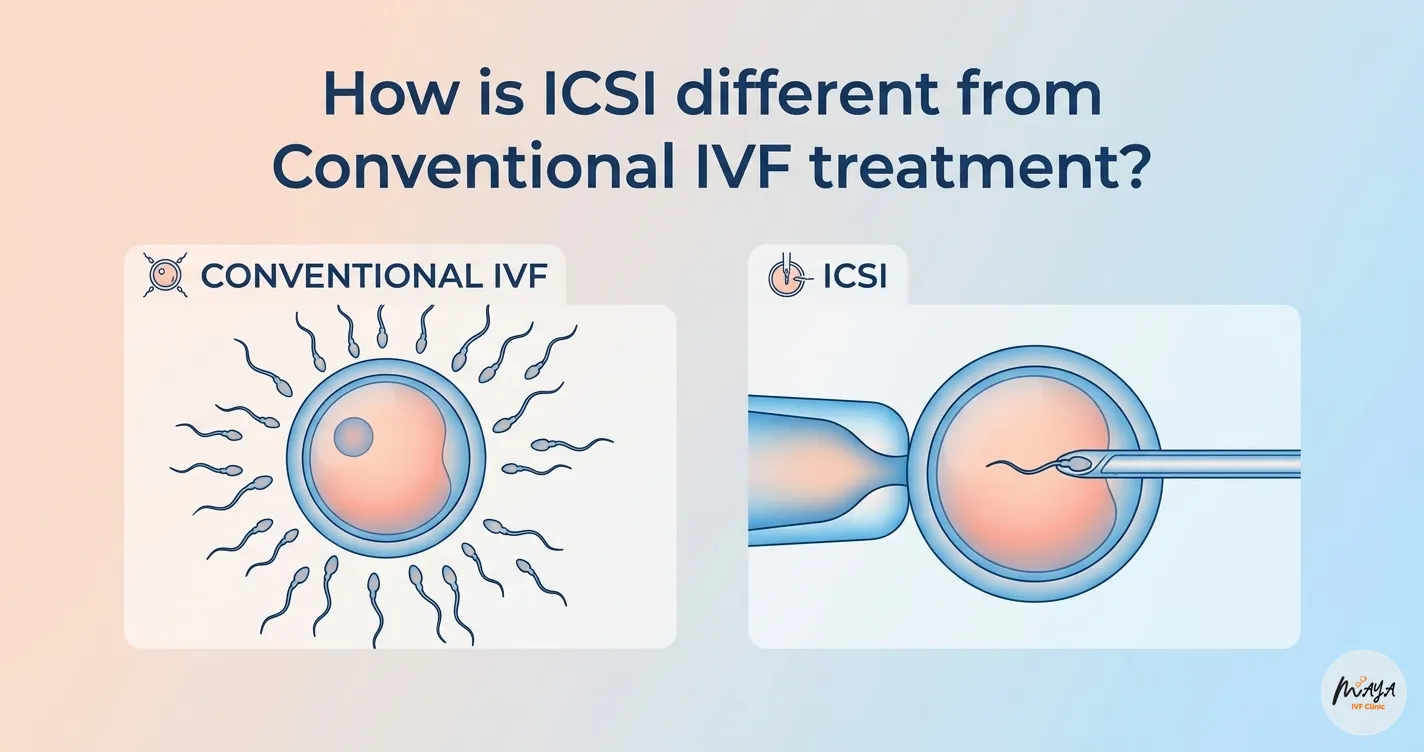
How is ICSI different from Conventional IVF treatm...
ICSI and Conventional IVF both are forms of assisted reproductive treatment (ART) in which eggs are...
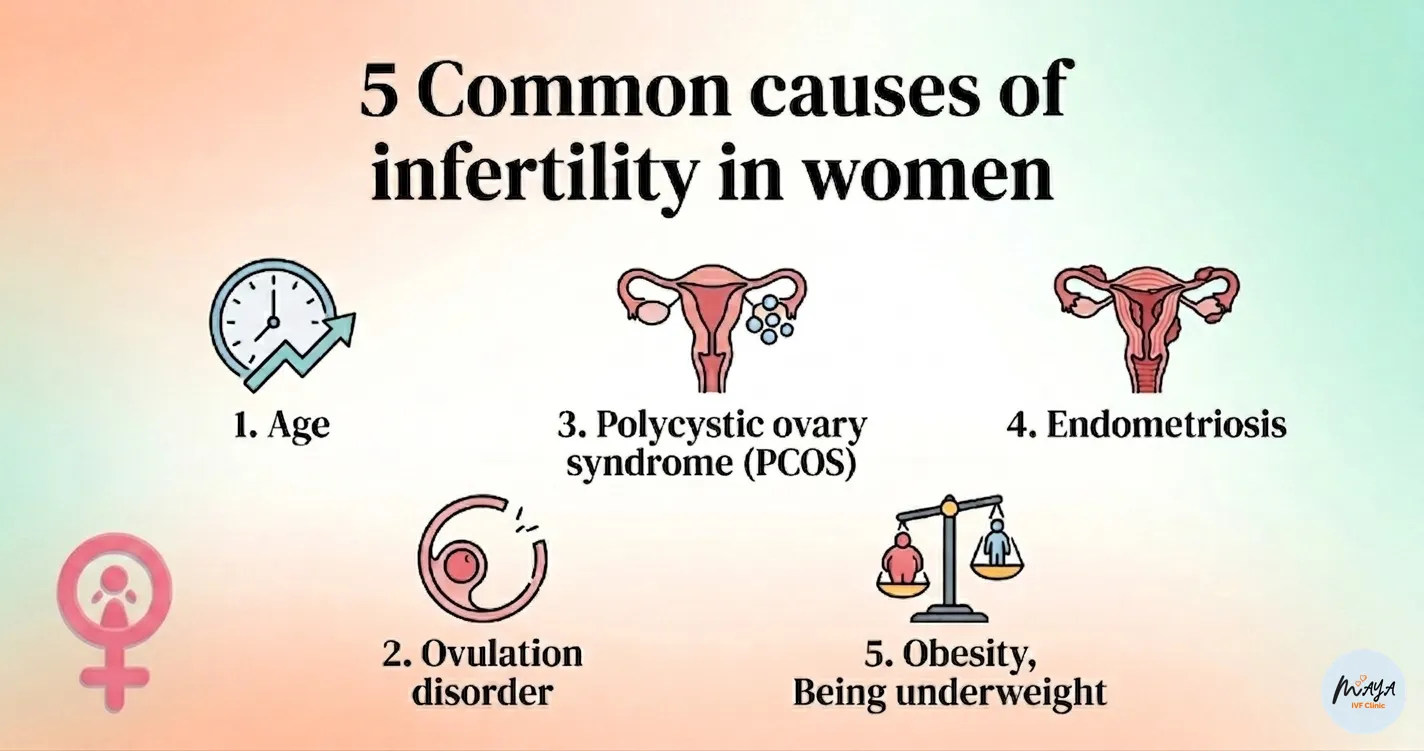
5 Common causes of infertility in women
A condition is diagnosed as infertility when a heterosexual couple is unable to conceive after one y...

 Nepal International Fertility and Laparoscopic Centre (NIFLC).
All rights reserved.
Nepal International Fertility and Laparoscopic Centre (NIFLC).
All rights reserved.